


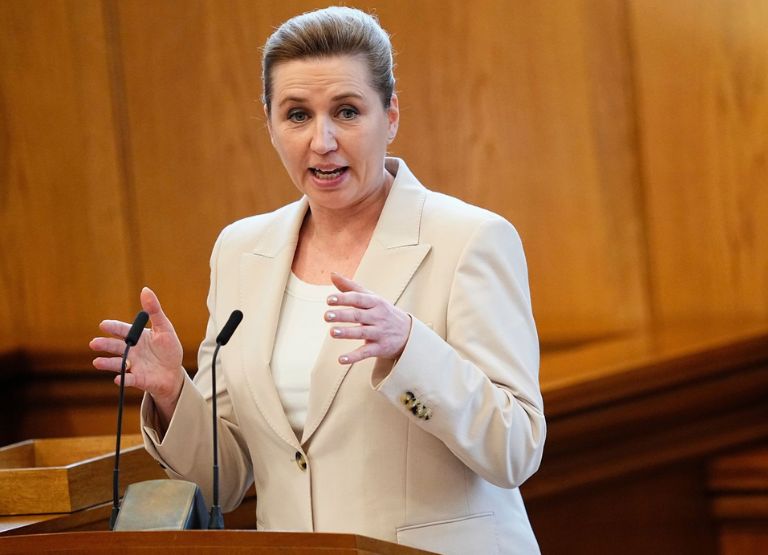
COPENHAGEN — The Prime Minister of Denmark, Mette Frederiksen, has failed to secure a parliamentary majority following a general election that saw her Social Democratic party suffer its weakest showing in over 120 years.
The final results, validated early Wednesday, confirm that despite remaining the largest single party, the Social Democrats collapsed to just 18.2% of the vote. This is the lowest share the center-left party has recorded since the 1903 general election, a result that has shocked the country and sent shockwaves through Scandinavian politics.
‘A Defining Defeat’
Frederiksen, who had governed for the past four years leading a minority center-left government, called the snap election in October. Her goal was to build a broad coalition “across the center,” aiming to break the rigid bloc politics that had increasingly gridlocked Danish decision-making.
That gamble has spectacularly failed.
“This is not the result we hoped for,” Frederiksen said in a somber, emotional concession speech at the Social Democrats’ headquarters. The room, usually boisterous on election night, was filled with stunned silence and visible disappointment. “We asked for a mandate to unite. The people have given us a clear message: They are worried about the direction of our country, and they have punished us for it.”
The main opposition, a center-right “blue bloc” led by the Liberal Party (Venstre) and a powerful, resurging far-right populist party, gained significant ground. While no single bloc secured an outright 90-seat majority in the 179-seat Folketing, the right-wing opposition holds a more viable path to forming a government.
Collapse of the Left, Rise of the Populists
The election was dominated by voter anxiety over record inflation, a deepening healthcare crisis, and the ongoing controversy over Denmark’s controversial mink-culling scandal from 2020. Frederiksen, who was personally implicated in the criticism, saw her own approval ratings plummet during the campaign.
The big winners of the night were parties that capitalized on anti-establishment sentiment. The populist “Denmark First” party surged to second place, while several small, newly-formed parties across the spectrum picked up enough seats to become kingmakers.
“The political map of Denmark has been redrawn tonight,” said Christian Nielsen, a political analyst at Copenhagen University. “This is not just a weak showing; it is a defining defeat. It ends the era of stable Social Democratic dominance and plunges Denmark into a period of deep political instability and complex, painful coalition talks.”
A Long Road to Power
Denmark must now endure “Dronningerunder” (Queen’s Rounds), a formal process where party leaders meet with King Frederik X to advise who should first attempt to form a government. Given the fragmented new parliament, political analysts predict these negotiations could take weeks, or even months, with a real risk of another election if no agreement can be reached.
Frederiksen has announced she will not resign as party leader, but her tenure as Prime Minister is, for now, hanging by a thread. The next weeks will determine if she can defy all odds to lead a new, even more precarious government, or if her gamble on unity has permanently sealed her fate as the leader who oversaw her party’s most historic decline.









Leave a Reply