


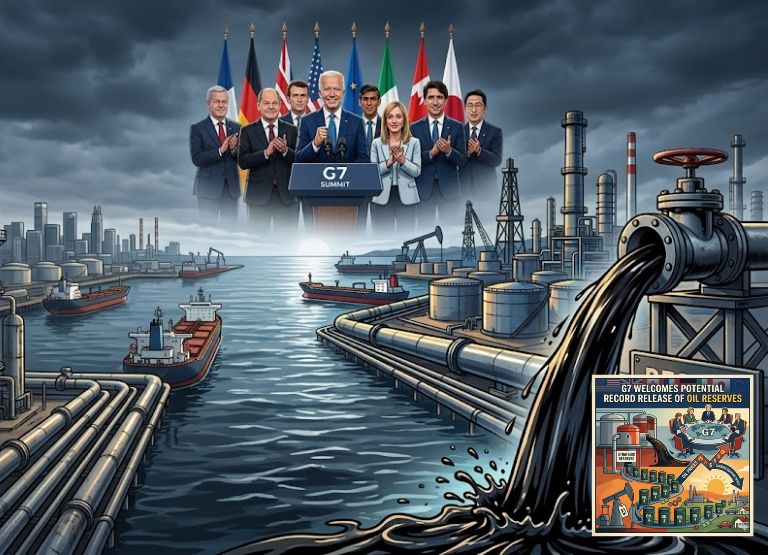
Global leaders from the Group of Seven (G7) have signaled support for a potential record release of strategic oil reserves in an effort to stabilize global energy markets and reduce rapidly rising fuel prices.
The move comes as oil prices continue to surge due to geopolitical tensions, supply disruptions, and increasing global demand. Officials say releasing emergency reserves could help ease pressure on consumers and businesses worldwide.

Why the G7 Is Considering Releasing Oil Reserves
Energy prices have climbed significantly over recent months, raising concerns about inflation and economic stability in many countries. Governments in major economies are exploring ways to control the situation without disrupting long-term energy strategies.
The G7—consisting of the United States, Canada, the United Kingdom, France, Germany, Italy, and Japan—has been discussing the possibility of coordinating a large-scale release from national strategic petroleum reserves.
Such reserves are emergency stockpiles maintained by governments to protect against sudden supply shocks.
Record Release Could Stabilize Markets
Energy analysts say the proposed release could be one of the largest coordinated oil reserve releases in history. The aim is to increase supply in global markets temporarily, which could lower crude oil prices and reduce pressure on gasoline and diesel costs.
If implemented, the plan would involve multiple countries releasing millions of barrels of oil into the market over a defined period.
Experts believe the measure could:
- Increase short-term oil supply
- Stabilize volatile energy markets
- Lower fuel prices for consumers
- Reduce inflationary pressure on economies
Role of Global Energy Organizations
Any coordinated release of oil reserves typically involves cooperation with international energy organizations such as the International Energy Agency, which helps member countries manage emergency energy responses.
The agency has previously coordinated global reserve releases during major supply disruptions, including geopolitical conflicts and natural disasters affecting oil production.
Impact on Global Oil Markets
Oil prices are influenced by several factors, including supply decisions by producers such as the OPEC and its partners. Market analysts say that a large release from strategic reserves could temporarily counterbalance reduced production or supply shortages.
However, experts caution that such releases are short-term solutions and cannot permanently fix supply issues.
Concerns and Long-Term Considerations
While the move could provide immediate relief, some economists warn that relying heavily on reserve releases may reduce emergency stockpiles meant for crises. Governments therefore must balance short-term price stabilization with long-term energy security.
Additionally, many G7 countries are also pushing toward renewable energy investments to reduce reliance on fossil fuels in the future.
What Happens Next
Discussions among G7 leaders are ongoing, and final decisions will likely depend on market conditions and coordination with global energy agencies.
If approved, the coordinated action could send a strong signal to global markets and potentially slow the rapid rise in fuel prices that has affected households and industries worldwide.
Energy markets are now closely watching upcoming announcements from G7 governments and international energy bodies regarding the scale and timing of any reserve release.







Leave a Reply