


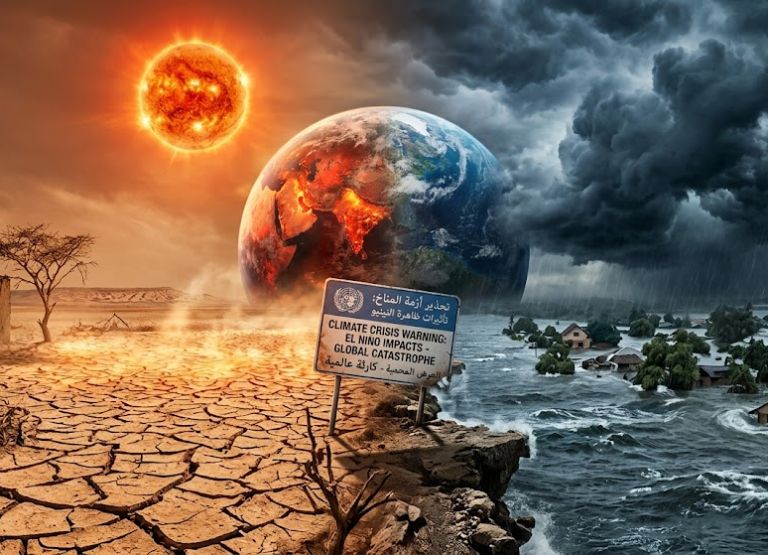
The United Nations has issued a fresh climate warning as the return of the El Niño is expected to intensify global weather disruptions in the coming months.
What Is Happening?
According to climate experts, El Niño conditions are rapidly developing in the Pacific Ocean, raising concerns about extreme weather events worldwide. The phenomenon is known for increasing global temperatures and disrupting normal weather patterns.
The UN has cautioned that this cycle could lead to record-breaking heat, stronger storms, and severe droughts in vulnerable regions.
Why El Niño Matters
El Niño is a natural climate pattern, but when combined with ongoing global warming, its effects become more intense. Scientists warn that this combination could push global temperatures to new highs.
Regions such as Asia, Africa, and parts of the Americas are expected to face significant impacts, including water shortages, crop damage, and heatwaves.
Global Risks and Impact
The warning highlights several key risks:
- Increased heatwaves across multiple continents
- Heavy rainfall and flooding in some regions
- Severe droughts in others
- Threats to food security and agriculture
The UN emphasized that developing countries could be hit the hardest due to limited resources to cope with extreme climate events.
Calls for Urgent Action
The United Nations has urged governments worldwide to take immediate action to strengthen climate resilience. This includes better disaster preparedness, sustainable water management, and stronger environmental policies.
Experts stress that early planning can reduce the damage caused by extreme weather events linked to El Niño.
What Comes Next?
Climate agencies will continue to monitor ocean temperatures and atmospheric changes over the coming months. If El Niño fully develops, its effects could last well into the next year.
Conclusion
The UN’s latest warning serves as a reminder of the growing impact of climate change. As El Niño approaches, the world faces another test of its ability to respond to increasingly unpredictable and extreme weather conditions.







Leave a Reply