


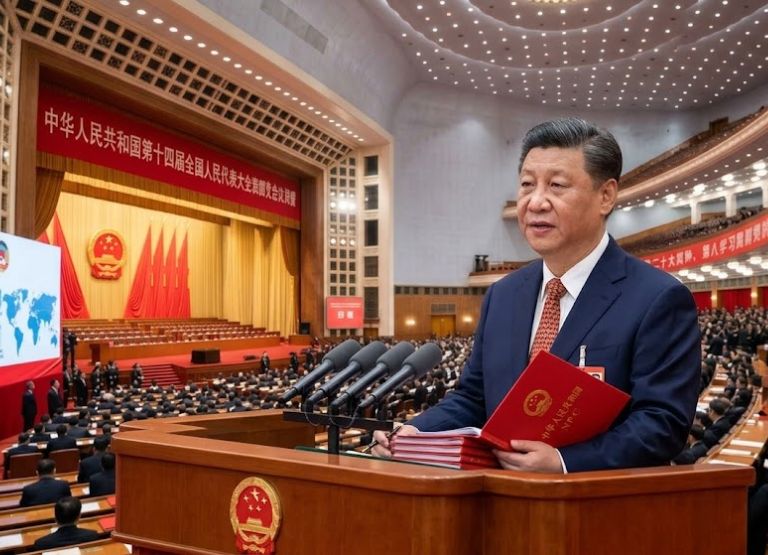
China’s annual “Two Sessions” political meetings have concluded in Beijing, offering key insights into the country’s economic priorities, technological ambitions, and geopolitical strategy for the coming years. The meetings — which bring together the National People’s Congress (NPC) and the Chinese People’s Political Consultative Conference (CPPCC) — are the most important political events in China’s calendar.
Held in March 2026 at the Great Hall of the People, the sessions outlined Beijing’s plans to stabilize economic growth, strengthen technological independence, and manage domestic challenges such as weak consumer demand and rising debt risks.
What Are China’s “Two Sessions”?

The “Two Sessions,” known in Chinese as Lianghui, refer to the annual joint meetings of China’s top legislature and political advisory body. These meetings typically last about a week and set national priorities for economic policy, foreign affairs, and social development.
During the sessions, Chinese leaders present the government work report, approve budgets, and announce economic targets that shape the country’s direction for the year ahead.
Key Takeaways from China’s 2026 Two Sessions

1. Lower Economic Growth Target
One of the biggest announcements was China’s GDP growth target of around 4.5%–5% for 2026, the lowest target the government has set in decades.
This lower target reflects several economic challenges including:
- Weak domestic consumption
- A prolonged property market crisis
- Rising local government debt
Chinese leaders say the lower target allows them to focus on long-term economic stability rather than rapid expansion.
2. Major Push for Technology and Innovation
China is accelerating efforts to become a global leader in advanced technology, especially in areas such as:
- Artificial Intelligence
- Semiconductor manufacturing
- High-tech industrial production
- Green energy technologies
The government aims to reduce reliance on foreign technology and build stronger domestic supply chains amid rising competition with Western economies.
3. Focus on Jobs and Domestic Demand
Chinese policymakers are also prioritizing employment and consumer spending.
Key targets include:
- More than 12 million new urban jobs in 2026
- Inflation target of around 2%
- Measures to boost household consumption
The goal is to make China’s economy less dependent on exports and more driven by domestic demand.
4. New Laws and Social Policies
China’s parliament is expected to approve several new laws, including an “ethnic unity” law aimed at strengthening national identity and increasing the use of Mandarin in public life.
The government is also introducing environmental legislation designed to consolidate climate regulations and support China’s goals of carbon neutrality by 2060.
5. Foreign Policy Signals
The meetings also sent signals about China’s approach to global diplomacy.
Officials emphasized stability in international relations while preparing for major geopolitical developments, including a potential summit between Chinese President Xi Jinping and the U.S. president later this year.
China continues to position itself as a major global power while managing rising tensions with Western countries.
What This Means for the World
The outcomes of the 2026 Two Sessions show that China is entering a new phase of economic policy focused on “high-quality growth” rather than rapid expansion.
Key implications include:
- Slower but more stable economic growth
- Greater investment in advanced technology
- Increased competition with the United States in strategic industries
- Stronger government control over economic and social policies
For global markets and geopolitics, China’s policy direction will continue to shape trade, technology competition, and international diplomacy.











Leave a Reply